In November I wrote about CapCut’s Terms of Service, specifically the gap between what their legal text actually says and what their clarification page claims it means.
The short version: you grant ByteDance a perpetual, irrevocable, royalty-free, sublicensable, worldwide license to your content the moment you upload it. Their FAQ says that’s not how they use it. I pointed out that the FAQ is not the contract.
Seven months later, here’s what changed. Short version, nothing good.
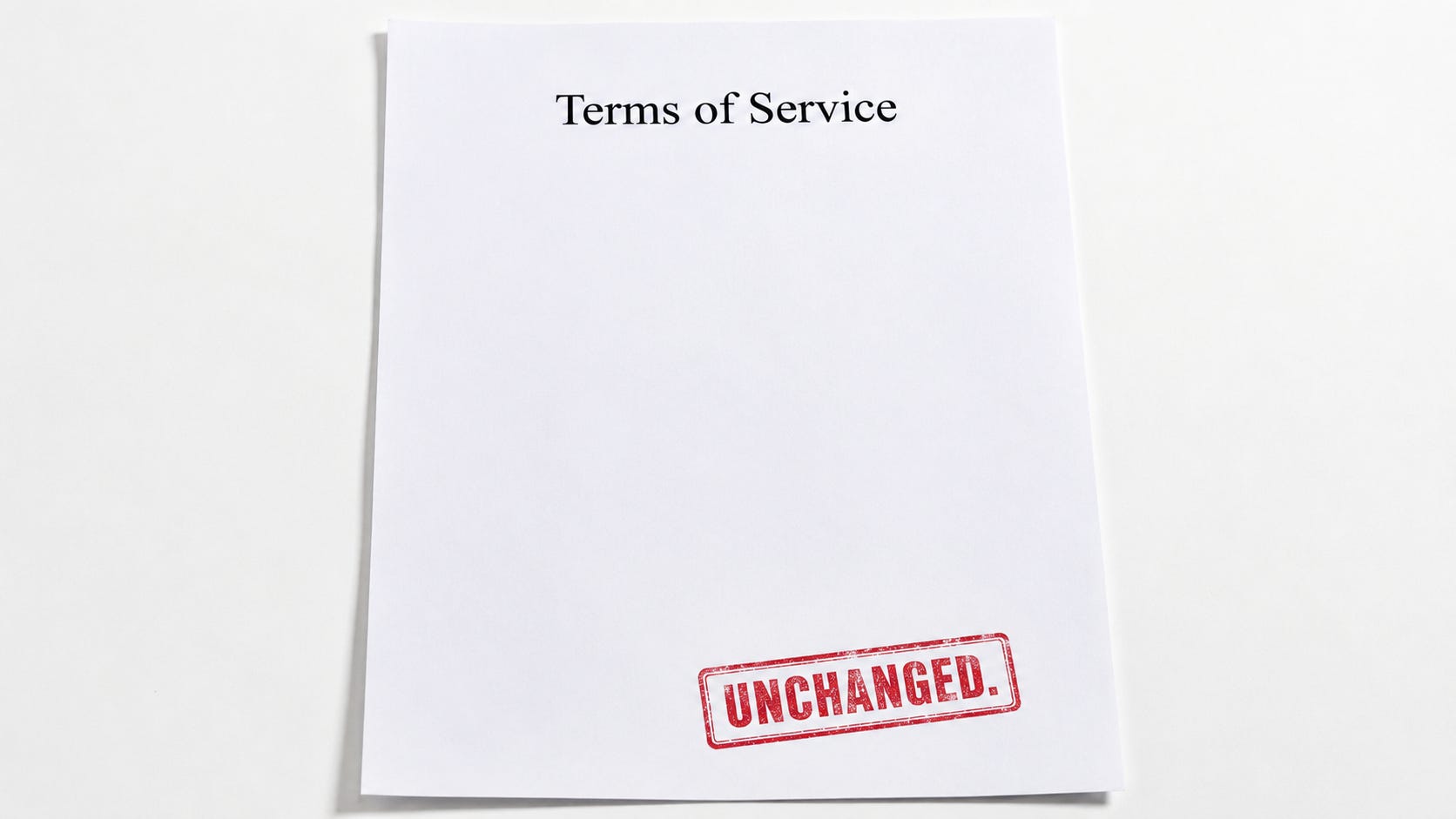
The Terms of Service haven’t changed. The April 2026 update bumped the date at the top of the page. Section 10 is untouched. A lot happened around the terms, just not to the terms themselves.
The ban made it concrete. On January 19, 2025, CapCut disappeared from US app stores alongside TikTok. It came back within days, but if you had a client deadline that week, you had a problem you didn’t see coming and couldn’t do anything about. That’s the practical version of the theoretical risk I was describing in November.
The restructuring didn’t fix your contract. ByteDance formed TikTok USDS Joint Venture LLC in January 2026 with Oracle, Silver Lake, Abu Dhabi’s MGX, and various investors (yes, all small ass companies that are fully on your side. Sarcasm detectors should be on full alert.)
ByteDance retained exactly 19.9% ownership, which is one basis point below the legal threshold that would trigger another ban. If you think that number is a coincidence, I have a clarification page I’d like to sell you. None of it changed the license you already agreed to.
Europe started taking it seriously. The EU fined ByteDance €530 million over data transfers to China, and there’s an active class-action lawsuit in the US. Regulators on two continents are now making the same arguments in court that ToS critics were making in blog posts last summer.
They still haven’t mentioned AI. Not in the FAQ, not in any update. The legal text still grants exactly the rights you’d need to feed content into a machine learning model — reproduce, adapt, modify, make derivative works — and CapCut has continued to say nothing about it while the rest of the industry has been forced to answer for this publicly. Draw your own conclusions.
The good news is there are better alternatives now than there were in November. DaVinci Resolve is still the right answer for serious work — local editor, your files stay on your machine. But a project called OpenCut (opencut.app) is worth watching. It’s open source, MIT-licensed, runs in your browser, and processes everything locally with no account and no upload required. Basic timeline editing works now and the effects library isn’t there yet, but it picked up 48,000 GitHub stars in under a year, which is a pretty clear signal about how many people have been waiting for something like it.
I’ll repeat what I said in November: I’m not a lawyer, and if any of this actually affects your livelihood, talk to one. But the terms haven’t changed while the legal pressure around them has grown considerably, and I think that tells you something.
The FAQ is not the contract. It wasn’t in November. It still isn’t.
Original article: The Fine Print vs. The FAQ
CapCut’s full Terms of Service: https://capcut.com/clause/terms-of-service. Section 10, “User-Generated Content.” Read it yourself. It’s not long. It’s just bad.